Source adjustable white washing machine stand for laundry, basements, and RVs
Find 29 adjustable white washing machine stand options from verified Chinese manufacturers. Buyers can compare metal, plastic, and alloy models with varying dimensions, wheel types, and customization levels to suit different laundry setups.
Key considerations
Products List


Comprehensive Sourcing Guide
Strategic Sourcing Guide for Adjustable White Washing Machine Stands
Understanding Product Specifications and Material Composition
When sourcing an adjustable white washing machine stand, buyers must first navigate a complex landscape of material definitions and dimensional specifications. The available market data indicates that these units are not monolithic in construction; rather, they are engineered from a diverse array of materials including metal, aluminum, alloy, plastic, and composite combinations such as PP (polypropylene) with stainless steel pipes and PVC wheels. The primary structural material is frequently cited as metal, with specific instances of aluminum and alloy usage, suggesting a market segment that prioritizes durability and load-bearing capacity. However, the presence of plastic and PVC components indicates that some models may focus on cost-efficiency or specific weight-reduction strategies, which requires careful verification against the intended load requirements of the washing machine.
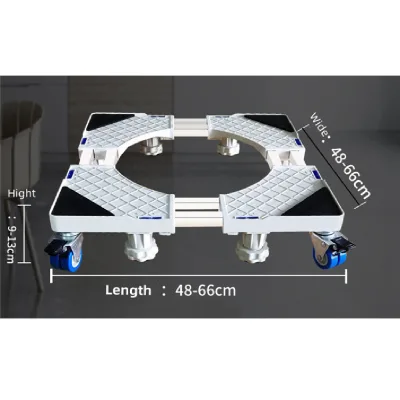
The dimensional specifications provided in the product listings reveal significant variability in standard packaging sizes and product dimensions. Observed standard sizes include configurations such as 4226.513.5 cm, 432722cm, and 52x35x25 cm, alongside a specific tube model dimension of 25X25mm with a thickness of 0.4mm. These measurements are critical for buyers to determine if the stand will fit within the allocated floor space of a laundry room or utility closet. Furthermore, the product models identified, such as W619-4, W619-1, W618-3, and DZ-1302, suggest that manufacturers offer distinct SKUs for different load capacities or stability requirements. The "Universal" compatibility noted in the specifications implies that these stands are designed to accommodate a wide range of washing machine footprints, but buyers should verify the specific weight limits and base dimensions of their target appliances against the stand's base leg configuration, which is often described as having four base legs and four wheels.
Functional Attributes and Customization Capabilities
The functional design of these stands is heavily influenced by the requirement for mobility and adjustability. A recurring attribute in the product data is the "Rotating Wheel" type, which facilitates the movement of heavy appliances for cleaning or maintenance. The configuration typically includes four wheels, and the installation type is often described as "Stackable," which is a crucial feature for maximizing vertical space in compact residential or commercial laundry areas. The color specification is consistently noted as "White," aligning with the core keyword and ensuring aesthetic consistency with modern laundry appliances.
Customization plays a pivotal role in the procurement strategy for these items. The market data explicitly states that customization is "Available," with specific attributes noting that both custom sizes and custom colors "Can" be arranged. This flexibility allows buyers to tailor the product to specific brand requirements or unique spatial constraints. However, there is also a conflicting data point indicating "Non-Customized" options, which suggests that the market offers both standard off-the-shelf inventory and bespoke manufacturing runs. Buyers must clarify whether they require a standard white unit or a customized variant, as this decision impacts the Minimum Order Quantity (MOQ) and lead times. The presence of OEM (Original Equipment Manufacturer) capabilities further supports the ability for brands to have these stands produced under their own label, a common requirement for retailers and appliance manufacturers looking to bundle accessories.
Compliance, Standards, and Certification Verification
Navigating the compliance landscape for washing machine stands requires a rigorous approach to verifying standards, as the provided data presents a mix of material standards and dimensional standards that may not represent full regulatory compliance. The product listings reference standards such as "plastic, metal" and specific dimensional standards like "452533cm" or "30308". These entries likely refer to packaging dimensions or material composition standards rather than safety certifications. Buyers should not assume that a product listing a material standard automatically meets international safety regulations for load-bearing appliances.
It is essential to distinguish between the physical dimensions of the product and the regulatory standards it adheres to. The data mentions "Surface Treatment: Chrome Plated," which is a process specification rather than a safety standard. While chrome plating can enhance corrosion resistance and aesthetic appeal, it does not inherently certify the stand's stability or safety. Buyers must verify if the manufacturer holds relevant certifications for mechanical safety, such as ISO standards for structural integrity or specific regional safety marks (e.g., CE, UL, or GS) depending on the target market. The absence of explicit certification data in the product facts necessitates a proactive verification process where buyers request test reports or certification documents from the supplier before finalizing an order. Relying solely on the listed "standard" attributes, which appear to be dimensional or material-based, is insufficient for ensuring compliance with safety regulations.
Cost Drivers and Pricing Dynamics
The pricing for adjustable white washing machine stands is influenced by several key factors, including material composition, customization level, and order volume. The observed price range in the market spans from $4 to $62.5 USD, a significant variance that reflects the diversity in product quality and specifications. Lower-priced items likely correspond to basic plastic or thinner metal constructions, while the higher end of the spectrum may include heavy-duty alloy or aluminum models with advanced surface treatments like chrome plating.
The Minimum Order Quantity (MOQ) is another critical cost driver, with observed ranges between 2 and 500 units. A specific data point notes an MOQ of 50, which serves as a benchmark for small to medium-sized buyers. However, the wide range suggests that suppliers may offer flexible terms for larger orders or specific customizations. The "PCS" attribute of 10PCS indicates that some listings may be for smaller packs or sample sets, which could affect the unit cost calculation. Buyers should be aware that customization, such as specific colors or sizes, often incurs additional tooling or setup costs, potentially pushing the unit price toward the higher end of the observed range. Additionally, the origin of the product, primarily China, and the place of origin in Henan, may influence logistics costs and final landed prices, though specific freight rates are not provided in the data.
Supplier Evaluation and Origin Considerations
Evaluating suppliers for washing machine stands requires a focus on their manufacturing capabilities and geographical location. The data indicates that the products originate from China, with a specific mention of Henan as a place of origin. This regional concentration suggests a specialized manufacturing hub for these types of home appliance accessories. Buyers should verify the supplier's capacity to handle the specific production requirements, such as the "Professional Installation" attribute, which implies that the product design may require expert assembly or that the supplier offers installation guidance.
When assessing suppliers, buyers should look for evidence of their ability to manage the "OEM" and "Customization" aspects of the business. The presence of multiple model numbers (e.g., W619-4, AY-5963, LX-YD1304) suggests that suppliers have a diverse production line capable of handling various specifications. However, the conflicting data regarding "Customized" versus "Non-Customized" attributes highlights the need for clear communication with the supplier to confirm their actual customization capabilities. Buyers should also inquire about the supplier's quality control processes, particularly regarding the "Surface Treatment" and material consistency, to ensure that the final product meets the required durability standards.
Quality Control and Long-Term Procurement Strategy
Implementing a robust quality control strategy is essential for mitigating risks associated with the variability in product specifications. Given the mix of materials from plastic to alloy, buyers should establish clear acceptance criteria for each material type. For metal components, verifying the thickness (e.g., 0.4mm) and the integrity of the chrome plating is crucial to prevent rust and structural failure. For plastic components, checking for brittleness or warping under load is necessary. The "Single Package Size" and "Packing" attributes (Color Box, Carton, Paper Box) also play a role in quality control, as improper packaging can lead to damage during transit.
Long-term procurement considerations should focus on building a relationship with suppliers who can consistently deliver on the "Universal" compatibility and "Stackable" features. Buyers should plan for potential changes in washing machine designs and ensure that the stands remain compatible with future models. The ability to customize sizes and colors will be a key differentiator for long-term success, allowing buyers to adapt to market trends. Additionally, monitoring the supply chain for potential disruptions, especially given the reliance on Chinese manufacturing, is advisable. Establishing a buffer stock or diversifying suppliers can help mitigate risks associated with lead times and production delays. By maintaining a rigorous approach to quality control and supplier evaluation, buyers can ensure a steady supply of high-quality, adjustable white washing machine stands that meet the needs of their customers.
Comparative Analysis of Product Variants
To facilitate informed decision-making, the following table compares key attributes of the observed product variants based on the provided data. This comparison highlights the diversity in specifications and helps buyers identify the most suitable options for their specific needs.
| Feature | Variant A (Metal/Alloy Focus) | Variant B (Plastic/Composite Focus) | Variant C (Custom/OEM Focus) |
|---|---|---|---|
| Primary Material | Metal, Aluminum, Alloy | Plastic, PVC, PP+Ss Pipe | Mixed (Depends on Customization) |
| Typical Dimensions | 4226.513.5 cm, 432722cm | 30308 cm, 52x35x25 | Custom Sizes Available |
| Wheel Type | Rotating Wheel (4 Wheels) | Rotating Wheel (4 Wheels) | Rotating Wheel (Configurable) |
| Surface Treatment | Chrome Plated | Standard Finish | Customizable |
| MOQ Range | 50 units | 2-500 units | Variable (OEM) |
| Packaging | Carton, Color Box | Paper Box | Color Box, Carton |
| Installation | Professional Installation | Standard | Professional/Custom |
| Color | White | White | Custom Color Available |
This table underscores the importance of aligning product selection with specific project requirements. Variant A is likely suited for heavy-duty applications requiring high durability, while Variant B may be appropriate for lighter loads or cost-sensitive projects. Variant C offers the flexibility needed for branded products or unique spatial constraints. By carefully evaluating these attributes, buyers can optimize their procurement strategy to achieve the best balance of cost, quality, and functionality.
FAQs
What materials are used for adjustable white washing machine stands?
These stands are constructed from metal, aluminum, alloy, or plastic materials. Some composite models combine PP with stainless steel pipes and PVC wheels to balance durability and cost efficiency for different load requirements.
Can buyers request custom sizes and colors for these stands?
Yes, customization is available for both sizes and colors to meet specific brand or spatial needs. However, standard non-customized white units are also offered, so buyers must clarify their requirements to determine the applicable minimum order quantity.
How do rotating wheels facilitate the installation of these stands?
The stands typically feature four rotating wheels and four base legs for easy mobility and stability. This configuration allows users to move heavy appliances for cleaning while maintaining a stackable design that maximizes vertical space in laundry areas.
What is the typical minimum order quantity for these products?
The minimum order quantity ranges from 2 to 500 units depending on the supplier and customization level. A specific benchmark observed is an MOQ of 50 units, though smaller sample packs of 10 pieces may be available for evaluation.
Where are these washing machine stands primarily manufactured?
The products originate from China, with specific manufacturing hubs identified in Henan. Buyers should verify the supplier's location and capacity to ensure they can meet the required production volume and delivery timelines for their specific project.
What packaging options are available for shipping these stands?
Packaging varies by model and includes cartons, paper boxes, and color boxes. The single package size often measures around 42x13x25.5 cm, ensuring safe transit while minimizing volume for efficient logistics and storage before final distribution.